
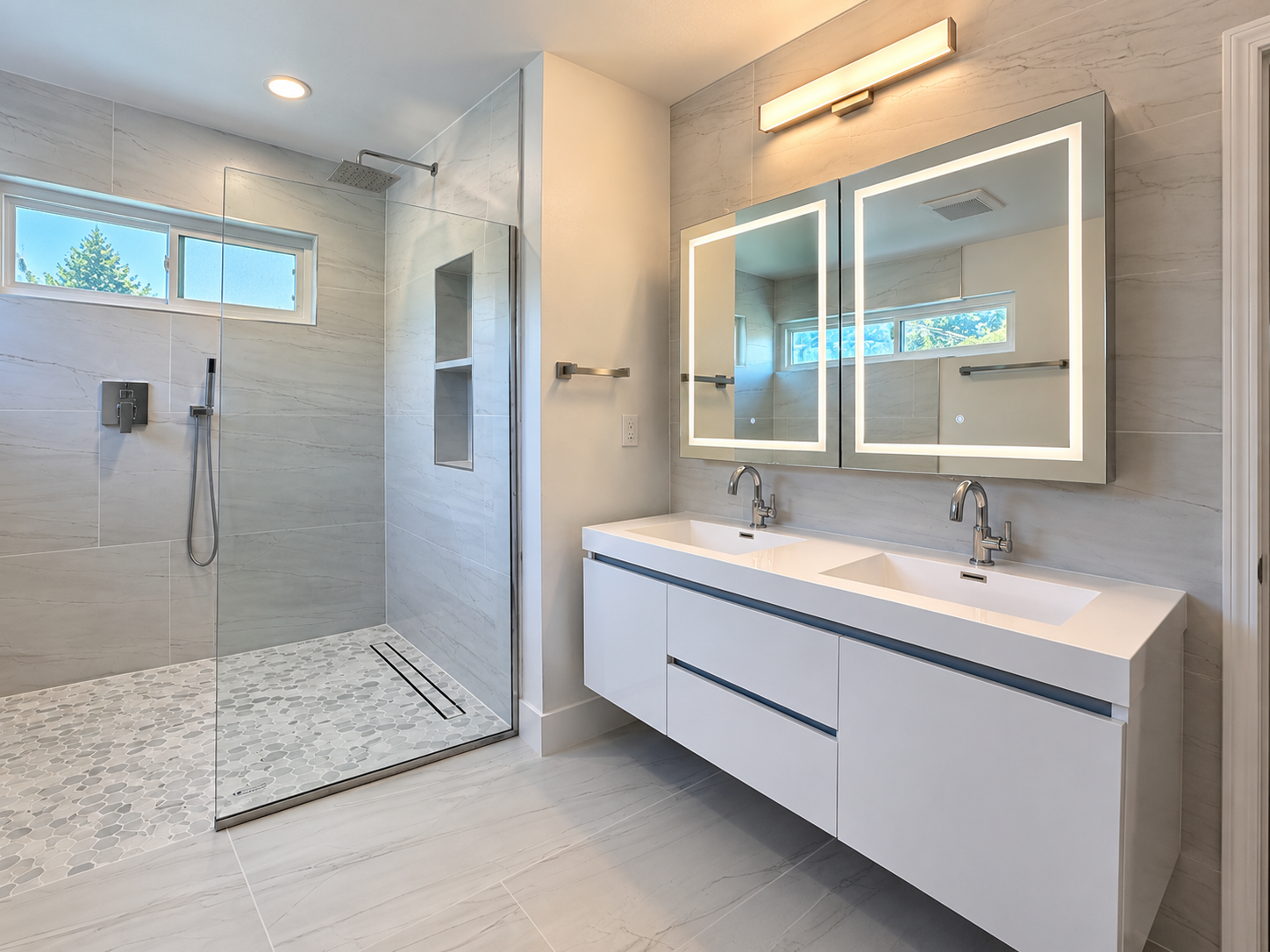
A vanity changes the way a bathroom looks and works, but its installation depends on more than choosing a cabinet. The room's wall, plumbing, clearances, electrical layout, and flooring all influence the result.
Measure the working space
Check the available width and depth, door and drawer swing, walkway space, sink locations, and mirror height. A floating vanity changes what is visible beneath it and may require appropriate wall support and more careful flooring and plumbing coordination. A double vanity is useful only if the layout has enough room for it.
Coordinate the parts before installation
Cabinet, countertop, sink, faucet, drain, backsplash, mirror, and lighting should be chosen as a group. Confirm who supplies each piece and whether lead times affect the construction sequence. Even a straightforward replacement may require plumbing adjustments or wall repair after the old cabinet comes out.
Choose for maintenance and daily use
Evaluate countertop and cabinet finishes for cleaning, moisture exposure, and the way the household uses the room. Organize storage around what actually belongs at the sink. For wet-area and flooring decisions, read our bathroom flooring guide.
See the three bathrooms completed in Castro Valley for different vanity applications, then describe your own bathroom.